


AIRAG IN KHOKHUUR REGISTERED AS UNESCO INTANGIBLE CULTURAL HERITAGE LIST
For the fourth consecutive year, the Chinggis Khaan National Museum has initiated and organized activities aimed at establishing a tourism route from Burkhan Khaldun, the sacred mountain where Chinggis Khaan decreed that offerings be made every morning and prayers recited every day, to the city of Kharkhorum, while promoting and disseminating the history of Mongolian kings and aristocracy and introducing generations of historical heritage to the public.
In honor of Undur Gegeen Zanabazar, a descendant of Chinggis Khaan’s Golden Lineage, and with the aim of promoting Mongolia’s history and culture, the “Drink of Kings” event is being held in the Ogoomor Valley.
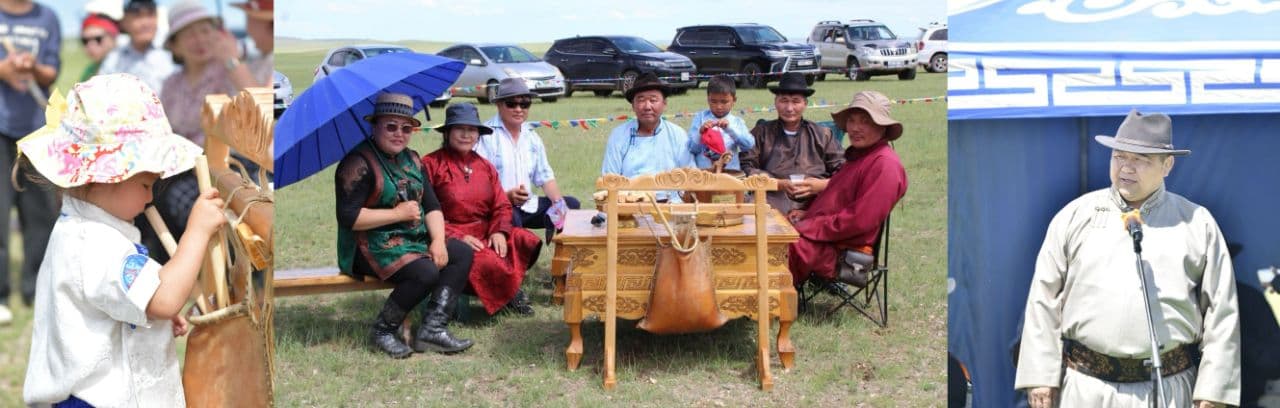
“Drink of Kings” celebrates airag in khuukhur, traditional Mongolian mare’s milk fermented in a leather khukhuur and the associated cultural practices, which have been inscribed on the UNESCO Intangible Cultural Heritage List. Opening the event, S. Chuluun, Director of the Chinggis Khaan National Museum, said: “We are confident that in the future we can organize a major tourism event in this area, promote and disseminate “Kings’ Beverage”, and develop it into a remarkable cultural center that attracts many visitors and grows in scale year after year.”
At the historical site called “Ogoomor” in Bayan Soum, the “Drink of Kings” airag festival selected the “Best Khokhuur Airag” and “Best Dembee Player” within the framework of the celebration, awarding them with “Certificates” and monetary prizes respectively.
The Ogoomor Valley, located within the territory of Bayan soum, is historically significant as a place where Undur Gegeen Zanabazar, one of the most remarkable artists in the history of humanity and a leading artistic figure in Asia, once established his residence and worked.
It is also one of the historic sites associated with the movements of the capital. Before present-day Ulaanbaatar eventually became established in the area of modern-day Khan-Uul and along the banks of the Khatан Tuul River in the 1730s, the capital moved between approximately 20 different locations, and Uguumur is one of these historically significant sites.