


ADVANCING SCHOLARLY RESEARCH ON THE RELIGIONS, BELIEF SYSTEMS, AND SPIRITUAL WORLDVIEW OF THE EURASIAN NOMADS
The religions, beliefs, and worldviews of the ancient nomadic peoples of Eurasia have long been an integral part of their social structures, culture, economy, and spiritual life.
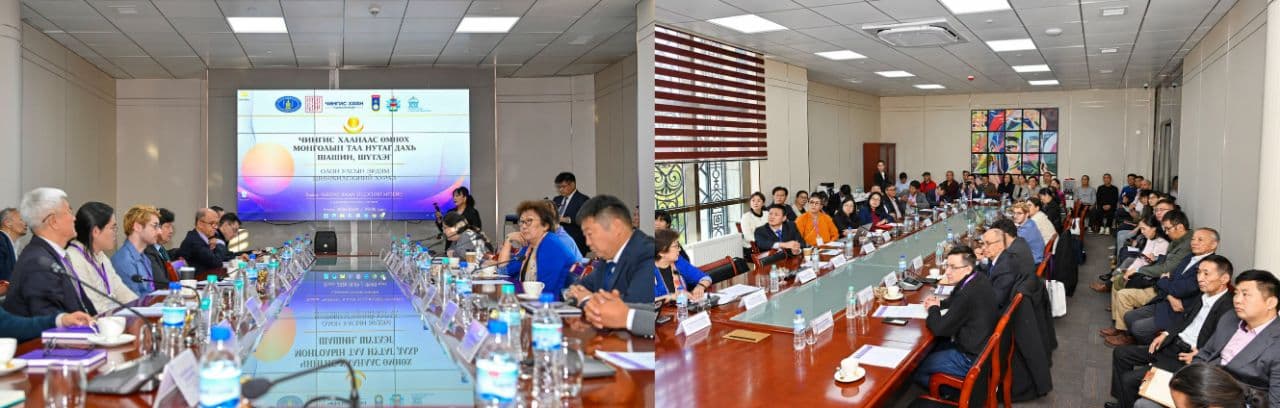
The religion, beliefs, and worldview of the ancient Eurasian nomadic peoples have always been an integral part of their social structure, culture, economy, and spiritual life. In recent years, new research and archaeological discoveries in the field of history, archaeology, ethnography, and source studies have enriched our knowledge and understanding of ancient nomads' religion and beliefs. These findings continue to create opportunities to re-examine the issue from multiple perspectives, relying on new facts and research methodologies. In this context, the international academic conference titled “Religion and Beliefs in the Mongolian Steppe before Chinggis Khaan” was organized on October 9, 2026.
The conference aims to discuss the historical development of religions and beliefs, rituals, traditions, and the distinctive features of the spiritual culture of nomadic peoples inhabiting the Mongolian steppe before the establishment of the Great Mongol State, drawing on the latest research findings.
Scholars and researchers from universities, academic institutes, and research organizations in approximately ten countries-including Mongolia, the Russian Federation, the People's Republic of China, the Federal Republic of Germany, the Republic of India, the Republic of Turkey, the Republic of Uzbekistan, and the Republic of Kazakhstan are participating in this conference and presenting their research results.
Opening the conference, Academician S. Chuluun, Acting Director of the Institute of History and Ethnology of the Mongolian Academy of Sciences, noted that in recent years, new archaeological discoveries, fresh interpretations of written sources, and methodological approaches from disciplines such as religious studies, ethnography, and anthropology have been increasingly incorporated into research on the religions and beliefs of ancient nomadic peoples in Mongolia and across Eurasia. As a result, the need to re-examine some long-established assumptions has become increasingly apparent.
He emphasized that as research in history, archaeology, ethnography, and other disciplines continues to expand, our knowledge of the religious beliefs of nomadic peoples is also being revised and enriched.
The conference will address a broad range of topics concerning the religions and beliefs of ancient states in the territory of present-day Mongolia. These include the worship of the sun and moon among ancient nomads; the development of the Xiongnu concept of Heaven and Tengri worship, the early spread of Buddhism, the religious beliefs of the Rouran Khaganate and the Turkic Khaganate, the religion of the ancient Uyghurs, and Nestorianism.
The conference is jointly organized by the Institute of History and Ethnology of the Mongolian Academy of Sciences, the Chinggis Khaan National Museum, the School of Social Sciences and Humanities of the Mongolian University of Science and Technology, and Gandantegchinlen Monastery, the Center of Mongolian Buddhists, in cooperation with the International Institute for Central Asian Studies (IICAS).